


Allergology
- Presentation
- Healthcare services
- Team
- About diseases or procedures
- Research
- Teaching
- Contact
Codi servei:
Recerca:
The Allergy Service conducts a well-established clinical and translational research activity, aimed at improving the diagnosis and treatment of allergic diseases, with a particular focus on severe asthma, immunotherapy, food allergy and drug allergy.
The service regularly participates in Phase I, II, III and IV clinical trials, as well as observational studies and independent and industry-sponsored research projects, primarily in respiratory allergy, biological treatments and new immunotherapy strategies. This activity is carried out in the Hospital's Multipurpose Clinical Research Unit (UPIC), which has specialised infrastructure and staff, allowing for a high capacity for recruitment and leadership in various studies.
The research findings are regularly presented at national and international congresses and published in indexed scientific journals. This activity has facilitated the research careers of professionals from the service once they have completed their specialist training.
The Service participates in multidisciplinary referral units with a clear research focus:
- Severe Asthma Unit, accredited by the SEAIC as a centre of excellence and teaching unit, with active projects such as a doctoral thesis on poor prognostic factors in eosinophilic severe asthma and an extensive annual training programme.
- Multidisciplinary Chronic Urticaria Unit, integrated into the Catalan and Balearic Urticaria Network.
- Atopic Dermatitis Unit, which has contributed to the implementation of biological therapies.
- Toxicoderma Unit, with specific clinical and research pathways.
The Service collaborates on competitive projects at regional and national levels, such as the project on food histamine intolerance (2020 R&D&I Call) and a grant from the Health Research Fund on beta-lactam allergy, in collaboration with the Faculty of Pharmacy and Vall d'Hebron Hospital.
Finally, the Service has been recognised with several Germans Trias Talents grants, which have enabled the consolidation of oral tolerance induction in paediatric food allergy and a deeper study of eosinophilic asthma.
Presentation:
The Allergy Service of the Germans Trias i Pujol University Hospital is responsible for the diagnosis, treatment and comprehensive follow-up of allergic diseases, including respiratory pathology (asthma and allergic rhinoconjunctivitis), cutaneous pathology (urticaria, atopic dermatitis and contact dermatitis), food allergy, drug allergy, hymenoptera venom allergy and other hypersensitivity reactions, in both adult and paediatric populations.
The service provides cover for the population of the Barcelonès Nord and Maresme areas and, for certain high-complexity procedures, acts as a territorial referral centre. The service's organisation by areas of expertise allows for the provision of specialised and efficient care, typical of a tertiary care university hospital, especially for patients with complex or severe allergic conditions.
The mission of the Allergy Service is to provide high-quality, safe, and evidence-based clinical care, aimed at improving patients' health and quality of life. Its main objectives are to achieve an accurate diagnosis, individualise treatments, prevent serious reactions, and enhance patient health education.
The clinical activity includes the performance of specialised diagnostic tests, advanced pharmacological treatment and allergen immunotherapy. In this field, the service's Immunotherapy Unit has been accredited as a Unit of Excellence by the Spanish Society of Allergy and Clinical Immunology (SEAIC), a fact that consolidates the Allergy Service of the Germans Trias i Pujol University Hospital as a centre of reference in the management of allergen immunotherapy.
The Service works in a coordinated manner with other hospital specialities and units, such as Pulmonology, Dermatology, Paediatrics, Otorhinolaryngology, Hospital Pharmacy and A&E, to ensure multidisciplinary and integrated care. In parallel, it runs an accredited teaching programme, training one Allergy and Immunology specialist registrar (STR) per year, and participates in clinical research projects, mainly in the field of asthma and immunotherapy.
The combination of specialised care, collaborative working, teaching and research enables the Allergy Service to distinguish itself by providing modern, efficient care oriented towards clinical excellence.
Featured service news:
Tipus Servei: 1
Correu: alergia.germanstrias@gencat.cat
Docència:
The Allergy Service at Hospital Germans Trias i Pujol offers teaching focused on training residents in the specialty and on continuing professional development for healthcare professionals.
Postgraded teaching
The Section is accredited to train one resident per year in Clinical Allergy and Immunology, with a comprehensive four-year programme in accordance with the official programme published in the BOE (Order SCO/3081/2006, 20 September).
Residents actively participate in clinical practice, laboratory activities, training sessions and research projects, with full integration into the Service's clinical and scientific duties. Training is tailored to each resident's initiative and vocation, offering options ranging from a more clinical focus to a more research-oriented one.
Information for residents
- Number of places: 1 accredited resident per year.
- See the Teaching guide.
- Further information:
► Access to complex pathology in a tertiary hospital with state-of-the-art services.
► Opportunity to participate in innovative treatments such as monoclonal antibodies, drug desensitisation protocols and the management of severe asthma and food allergy.
► Opportunity to present papers at national and European congresses, with awards won in various fields.
► Support for fourth-year residents to undertake placements and research abroad.
► Continuous updating through weekly monographic, bibliographic and clinical sessions.
- Find out what our residents think about the Allergology service of the Germans Trias.
Continuous training
The Service organises annual monographic sessions and continuing education activities accredited by the Catalan Council for Continuing Education in Health Professions, attended by professionals from the region and from external centres. The sessions cover areas such as rhinitis, asthma, food allergy, immunotherapy and drug allergy, with a practical, evidence-based approach.
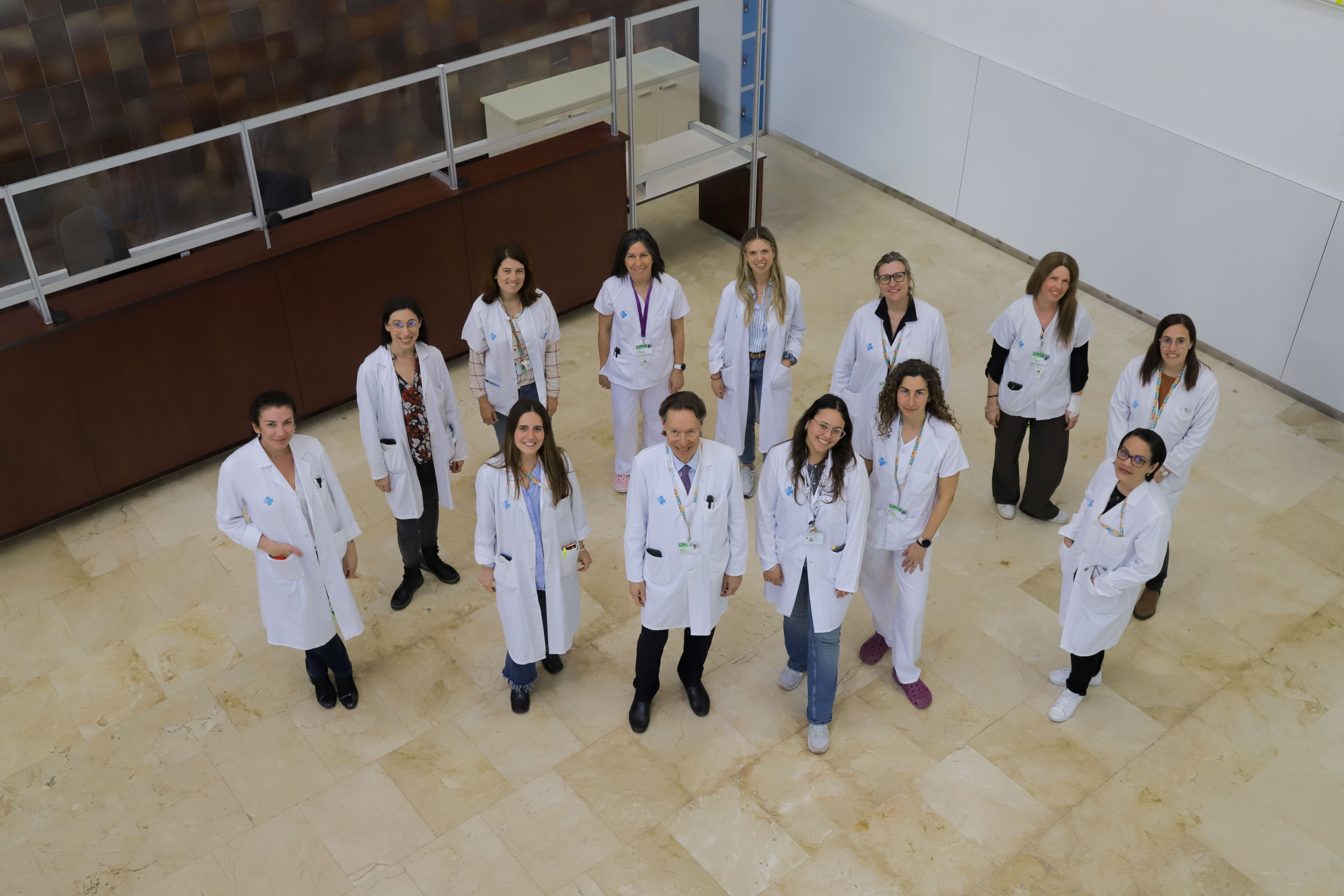
Medical team
Head of Section of the Allergy Service
Specialist doctor
Specialist doctor
Specialist doctor
Specialist doctor
Specialist doctor
María José López
Resident doctor
Ana María Aguirre
Resident doctor
María Luz Pantoja
Resident doctor
Sabrina Marcellina Pelizzo
Specialist Doctor. Graduated from the Central University of Venezuela (Caracas, Venezuela).
Nursing team
Yolanda Romero Ramírez
Nursing Supervisor in consultations
Nereida Albert Yecora
Consultation nursing team
Mireia Gómez Fernández
Consultation nursing team
Yolanda Mota Rodriguez
Nursing Supervisor at the Dr Robert and Gran Sol Specialised Care Centres of Badalona
Miguel Ángel Martínez Gómez
Nursing Supervisor at the Dr Robert and Gran Sol Specialised Care Centres of Badalona
Ma Carmen López Dosouto
Nursing Team of the Doctor Robert Specialised Care Centre
Marta Bolós
Nursing team of the Santa Coloma de Gramanet Specialised Care Centre
Laura Folch Munuera
Nursing Team Dr Robert Specialised Care Centre
The Allergy Service of the Germans Trias i Pujol University Hospital is responsible for the diagnosis, treatment and comprehensive follow-up of allergic diseases, including respiratory pathology (asthma and allergic rhinoconjunctivitis), cutaneous pathology (urticaria, atopic dermatitis and contact dermatitis), food allergy, drug allergy, hymenoptera venom allergy and other hypersensitivity reactions, in both adult and paediatric populations.
The service provides cover for the population of the Barcelonès Nord and Maresme areas and, for certain high-complexity procedures, acts as a territorial referral centre. The service's organisation by areas of expertise allows for the provision of specialised and efficient care, typical of a tertiary care university hospital, especially for patients with complex or severe allergic conditions.
The mission of the Allergy Service is to provide high-quality, safe, and evidence-based clinical care, aimed at improving patients' health and quality of life. Its main objectives are to achieve an accurate diagnosis, individualise treatments, prevent serious reactions, and enhance patient health education.
The clinical activity includes the performance of specialised diagnostic tests, advanced pharmacological treatment and allergen immunotherapy. In this field, the service's Immunotherapy Unit has been accredited as a Unit of Excellence by the Spanish Society of Allergy and Clinical Immunology (SEAIC), a fact that consolidates the Allergy Service of the Germans Trias i Pujol University Hospital as a centre of reference in the management of allergen immunotherapy.
The Service works in a coordinated manner with other hospital specialities and units, such as Pulmonology, Dermatology, Paediatrics, Otorhinolaryngology, Hospital Pharmacy and A&E, to ensure multidisciplinary and integrated care. In parallel, it runs an accredited teaching programme, training one Allergy and Immunology specialist registrar (STR) per year, and participates in clinical research projects, mainly in the field of asthma and immunotherapy.
The combination of specialised care, collaborative working, teaching and research enables the Allergy Service to distinguish itself by providing modern, efficient care oriented towards clinical excellence.
Featured service news:
Specialised care at hospital level and at the following Centres for Specialised Care (CAE) in the territory:
- CAE Dr Robert, Badalona
- CAE Dr Barraquer, Sant Adrià de Besòs
- CAE Gran Sol, Badalona
- CAE Santa Coloma
Comprehensive diagnosis and treatment of asthma and allergic rhinoconjunctivitis. Includes lung function tests, assessment of bronchial inflammation and allergy sensitisation studies.
The Severe Asthma Unit, a multidisciplinary team with Pulmonology, Paediatrics, ENT and Immunology, is accredited by the SEAIC as a centre of excellence and teaching unit, offering the best care to patients with complex or poorly controlled asthma.
Participation in the Difficult-to-Manage Food Allergy Unit, in collaboration with Paediatrics, Gastroenterology and Nutrition.
Performing food desensitisation procedures, mainly for milk and egg, using safe protocols in the Paediatric Day Hospital, where provocations with other foods and medicines are also carried out.
Assessment and diagnosis through skin tests, patch testing, tolerance tests and analytical studies to individualise treatment.
Diagnosis of IgE-mediated and non-IgE-mediated allergies, with skin tests and controlled drug exposure.
Performing drug desensitisation procedures in the Multipurpose Day Hospital (adults) and the Paediatric Day Hospital (children).
Active participation in the Infusion Adverse Reactions Committee (RAI) for the study and monitoring of adverse reactions related to drugs.
Administration and monitoring of sublingual, subcutaneous and intradermal treatments.
The Immunotherapy Unit, accredited as a Centre of Excellence by the SEAIC, has specialised staff and safe protocols to treat rhinitis, asthma, latex protein allergy and hymenoptera venom allergy.
Immunotherapy is the only causal treatment for allergic conditions, improving patients' quality of life in the long term.
Use of ALEX and ISAC tests, which allow the simultaneous identification of more than 150 allergenic components, improving diagnostic accuracy and personalising treatment for each patient.
This technology facilitates advances in the research and treatment of allergies, with more specific and safe results.
Collaboration with Dermatology in the following units:
- Chronic Urticaria Unit
- Atopic Dermatitis Unit
- Toxicoderma Unit
This multidisciplinary approach allows for a comprehensive assessment of the disease from both immunological and dermatological perspectives.
Active participation in clinical studies on severe asthma, immunotherapy and food allergy. The service is committed to innovation and the application of the latest scientific evidence to improve patient treatment.
Training programmes for patients and families on the prevention, treatment and management of allergic diseases. Personalised care enables the provision of educational tools to improve patients' quality of life.
Centre of Excellence in Allergenic Immunotherapy (SEAIC)
The Immunotherapy Unit of the Allergy Service is accredited as a Centre of Excellence by the SEAIC, recognising the high quality of care, the safety of the protocols and the team's expertise.
Subcutaneous and sublingual immunotherapy is performed for respiratory pathology, latex allergy and hymenoptera venom allergy, with close and personalised monitoring.
This accreditation positions the service as a centre of reference and guarantees the application of the best practices based on scientific evidence.
Accredited multidisciplinary Severe Asthma Unit
The Service participates in a Severe Asthma Unit accredited by the SEAIC as a centre of excellence and teaching unit, comprising Allergy, Pulmonology, Paediatrics, ENT and Immunology.
The unit offers a comprehensive assessment of patients with severe or poorly controlled asthma, including advanced diagnostics, therapeutic optimisation and specialised follow-up.
Biological treatments are indicated and administered according to clinical and phenotypic criteria, with structured monitoring of response and safety.
This multidisciplinary model improves clinical outcomes and positions Germans Trias as a highly specialised centre for complex asthma.
Food Desensitisation in the Paediatric Day Hospital
The Allergy Service performs food desensitisation, primarily for milk and egg, in the Paediatric Day Hospital, using structured protocols and in a highly secure environment.
This procedure is aimed at patients with difficult-to-manage food allergies and allows the risk of anaphylaxis to be reduced and significantly improves quality of life.
The Service is part of the Difficult-to-Manage Food Allergy Unit, together with Paediatrics, Gastroenterology and Nutrition, with specialised clinical and teaching activities.
Specialist Day Hospital for Drug Allergy
The Germans Trias i Pujol Hospital has a Multidisciplinary Day Hospital (adults) and a Paediatric Day Hospital where controlled exposure tests and desensitisation to essential medicines are carried out.
This approach allows for the confirmation or exclusion of drug allergies, the provision of essential treatments and the offering of safe therapeutic alternatives in complex patients.
The Service actively participates in the Infusion Adverse Reactions (RAI) Committee, reinforcing patient safety and coordination with other hospital services.
Molecular diagnostics applied to precision allergy medicine
The Service integrates molecular diagnostics as an advanced clinical tool in the study of complex allergic pathology, using platforms such as ALEX and ISAC.
These techniques allow the identification of relevant molecular components, the differentiation of clinical from cross-reactive sensitisations, and the improvement of therapeutic decision-making.
Its selective application contributes to a more precise indication for immunotherapy and to personalised care, in line with European standards for precision medicine.
The Allergy Service conducts a well-established clinical and translational research activity, aimed at improving the diagnosis and treatment of allergic diseases, with a particular focus on severe asthma, immunotherapy, food allergy and drug allergy.
The service regularly participates in Phase I, II, III and IV clinical trials, as well as observational studies and independent and industry-sponsored research projects, primarily in respiratory allergy, biological treatments and new immunotherapy strategies. This activity is carried out in the Hospital's Multipurpose Clinical Research Unit (UPIC), which has specialised infrastructure and staff, allowing for a high capacity for recruitment and leadership in various studies.
The research findings are regularly presented at national and international congresses and published in indexed scientific journals. This activity has facilitated the research careers of professionals from the service once they have completed their specialist training.
The Service participates in multidisciplinary referral units with a clear research focus:
- Severe Asthma Unit, accredited by the SEAIC as a centre of excellence and teaching unit, with active projects such as a doctoral thesis on poor prognostic factors in eosinophilic severe asthma and an extensive annual training programme.
- Multidisciplinary Chronic Urticaria Unit, integrated into the Catalan and Balearic Urticaria Network.
- Atopic Dermatitis Unit, which has contributed to the implementation of biological therapies.
- Toxicoderma Unit, with specific clinical and research pathways.
The Service collaborates on competitive projects at regional and national levels, such as the project on food histamine intolerance (2020 R&D&I Call) and a grant from the Health Research Fund on beta-lactam allergy, in collaboration with the Faculty of Pharmacy and Vall d'Hebron Hospital.
Finally, the Service has been recognised with several Germans Trias Talents grants, which have enabled the consolidation of oral tolerance induction in paediatric food allergy and a deeper study of eosinophilic asthma.
The Allergy Service at Hospital Germans Trias i Pujol offers teaching focused on training residents in the specialty and on continuing professional development for healthcare professionals.
Postgraded teaching
The Section is accredited to train one resident per year in Clinical Allergy and Immunology, with a comprehensive four-year programme in accordance with the official programme published in the BOE (Order SCO/3081/2006, 20 September).
Residents actively participate in clinical practice, laboratory activities, training sessions and research projects, with full integration into the Service's clinical and scientific duties. Training is tailored to each resident's initiative and vocation, offering options ranging from a more clinical focus to a more research-oriented one.
Information for residents
- Number of places: 1 accredited resident per year.
- See the Teaching guide.
- Further information:
► Access to complex pathology in a tertiary hospital with state-of-the-art services.
► Opportunity to participate in innovative treatments such as monoclonal antibodies, drug desensitisation protocols and the management of severe asthma and food allergy.
► Opportunity to present papers at national and European congresses, with awards won in various fields.
► Support for fourth-year residents to undertake placements and research abroad.
► Continuous updating through weekly monographic, bibliographic and clinical sessions.
- Find out what our residents think about the Allergology service of the Germans Trias.
Continuous training
The Service organises annual monographic sessions and continuing education activities accredited by the Catalan Council for Continuing Education in Health Professions, attended by professionals from the region and from external centres. The sessions cover areas such as rhinitis, asthma, food allergy, immunotherapy and drug allergy, with a practical, evidence-based approach.
Contacte: alergia.germanstrias@gencat.cat