


Digestive System
- Presentation
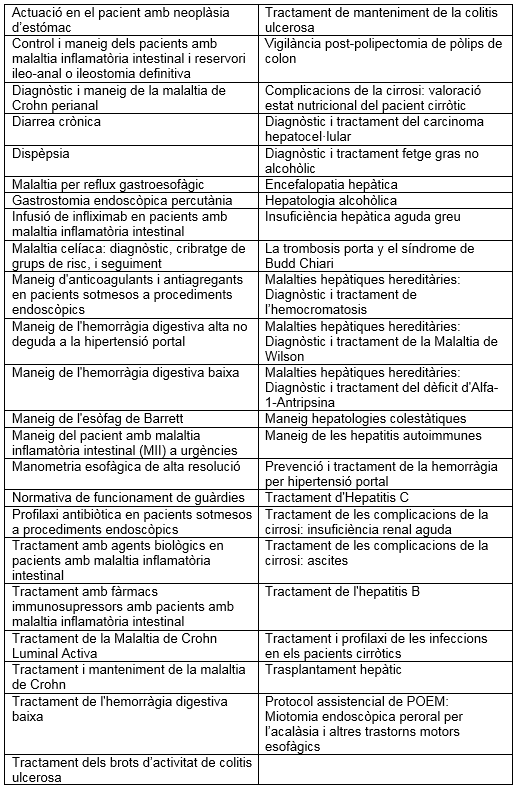
- Healthcare services
- Team
- About diseases or procedures
- Research
- Teaching
- Contact
Codi servei:
Recerca:
The Digestive System Service conducts intensive research in various areas of the specialty, which has resulted in the generation of patents and numerous publications in the most prestigious journals in this field. For this reason, it has staff dedicated exclusively to research. However, many of the service's doctors also devote part of their time to it.
Currently, the Digestive System Service has 5 research areas of interest:
- Inflammatory Bowel Disease
- Hepatology
- Neurogastroenterology
- Gastrointestinal Endoscopy
- Gastrointestinal Haemorrhage
The inflammatory bowel disease and hepatology groups are part of two public research networks of excellence: the Agency for the Management of University Grants and Research (AGAUR) and the Spanish Network for Biomedical Research in Liver and Digestive Diseases (CIBEREHD).
Regarding AGAUR (https://agaur.gencat.cat/), the service was recognised as a consolidated research group over 10 years ago and currently has two consolidated research groups: the Gastroenterology Group and the Hepatology Group.
As for CIBEREHD (https://www.ciberehd.org), the service has two distinct groups, corresponding to two separate research areas. The CB06/04/0034 group, Gastroenterology (principal investigator: Eugeni Domènech) and the CB06/04/0033 group, Hepatology (principal investigator: Carolina Armengol).
Presentation:
The Digestive System Service (SAD) at Hospital Germans Trias i Pujol aims to diagnose, treat and monitor motor, inflammatory and peptic diseases of the digestive tract and the liver, as well as to diagnose and treat congenital and acquired diseases of the digestive and biliary tract endoscopically.
The service is organised into three units (Endoscopy, Gastroenterology and Digestive Complementary Tests), and each includes different areas of care (inflammatory bowel disease, neurogastroenterology, gastrointestinal haemorrhage, hepatology, liver cancer, advanced endoscopy). This subspecialisation allows the department to be a centre of excellence in the Barcelonès Nord and Maresme area for various pathologies that require highly complex and innovative diagnostic and therapeutic techniques, typical of a tertiary care centre.
The SAD is one of the pioneering centres in the state for the treatment of inflammatory bowel disease and has been organising a prestigious update course for more than three decades, which annually features the world's leading experts. The Multidisciplinary Unit for Inflammatory Bowel Disease was the first of the Catalan Health Institute's hospitals to be accredited in 2018, having been re-accredited in 2021 and 2024, always with the highest qualification. Likewise, the Hepatology Unit also obtained accreditation from the Spanish Association for the Study of Liver Diseases.
In 2025, the Digestive System Service was recognised as a CSUR (Centres, Services and Units of Reference) for the treatment of type III achalasia.
The service's physicians provide undergraduate teaching at the Faculty of Medicine of the Autonomous University of Barcelona (UAB), as well as postgraduate teaching (as faculty for the Catalan Society of Digestology's own master's programme affiliated with the University of Lleida, directing several doctoral theses and organising the annual course on Inflammatory Bowel Disease). Finally, the Gastroenterology and Digestive Diseases Service has had two annual specialist registrar posts since 1990.
Highlights from the department:
- The hospital's new digestive and respiratory endoscopy unit will open on Monday
- Severe obesity is a risk factor for developing Crohn's disease and ulcerative colitis, according to a comprehensive study by Germans Trias Hospital.
- Professionals from the Digestive System department participate in a study led by the IGTP which reveals sex differences in experimental liver cirrhosis
- A study led by the CIBEREHD group at Hospital Germans Trias demonstrates for the first time how to reduce the number of colonoscopies and improve monitoring in patients with Crohn's disease
- Hospital Germans Trias, recognised as a centre of reference in Spain for treating patients with an oesophageal disorder that prevents them from swallowing using endoscopy.
Tipus Servei: 1
Correu: digestiu.germanstrias@gencat.cat
Docència:
Undergraduate teaching
The Digestive System Service has 1 Associate Professor from the Faculty of Medicine (Eugeni Domènech) and 1 Associate Medical Professor (Rosa Mª Morillas). In addition, it has 10 Clinical Associate Specialists: Míriam Mañosa, Helena Masnou, Margalida Calafat, Alba Ardèvol, Maria Puig, Laura Gonzàlez, Íngrid Marín, Anna Calm, Maria Torner and Dr María Bermúdez.
The activity at the Faculty of Medicine is centred on the MIC-III course for fourth-year students.
Postgraduate teaching
Resident training
The department is accredited and offers two annual places for residency training. The resident training programme complies with the BOE, with the first year comprising rotations through the Departments of Internal Medicine, Digestive Surgery, Emergency Medicine and Intensive Care Medicine. The second year is dedicated to the department's inpatient ward. The third year is divided between Digestive Functional Tests, Radiology and Digestive Endoscopy, and specialty on-call duties and outpatient clinic work with a dedicated schedule are initiated. The final year divides activity between the outpatient clinic, the inpatient ward and endoscopy.
In addition, the department provides training to residents of the Hospital of Internal Medicine and Intensive Care Medicine as part of the compulsory rotations in their training.
Furthermore, as a centre of excellence for both clinical care and research, the department also accepts residents from other centres for external rotations in the Functional Tests Unit, for specialised training in Inflammatory Bowel Disease or Advanced Endoscopy.
The department has two resident tutors: Helena Masnou and Margalida Calafat.
- Information for residents
-
Consult the Teaching guide.
-
Master's in Gastrointestinal Pathology of the Catalan Society of Digestology
In 2017, the Catalan Society of Digestology launched a 4-year Master's in Gastrointestinal Pathology, which is undertaken by all residents training in the specialty at any of the hospitals in Catalonia.
At Germans Trias, the department has a Master's Director and Course Coordinator (Míriam Mañosa), and five associate professors (Míriam Mañosa, Helena Masnou, Íngrid Marín, Margalida Calafat and Juan Colán).
Continuing Education
The service organises two accredited postgraduate courses annually.
- The ‘Miquel Àngel Gassull’ Course on Inflammatory Bowel Diseases, directed by Eugeni Domènech and Míriam Mañosa, lasting two days and featuring the participation of the most prestigious European experts.
- Update Course on the Digestive System, coordinated by Rosa M. Morillas, with sessions every Monday and Wednesday from October to June, and which includes all members of the department, including residents.
Medcial team
Eugeni Domènech Morral
Head of Service. Inflammatory Diseases.
Gastroenterology Unit
Míriam Mañosa Círia
Section Head. Inflammatory diseases
Margalida Calafat Sard
Specialist doctor. Inflammatory diseases.
Jordina Llaó Guàrdia
Specialist doctor. Inflammatory diseases.
Laura González González
Specialist doctor. Gastrointestinal haemorrhage.
Maria Puig González
Specialist doctor.
Anna Calm Salvans
Specialist doctor. Neurogastroenterology.
Hepatology Unit
Rosa Mª Morillas Cunill
Section Head. Hepatology
Helena Masnou Ridaura
Specialist doctor. Hepatology
Alba Ardèvol Ribalta.
Specialist doctor. Hepatology
María Bermúdez Ramos
Specialist doctor. Hepatic oncology.
Maria Torner Simó
Specialist doctor. Hepatic oncology.
Endoscopy Unit
Íngrid Marín Fernández
Section Head. Digestive Endoscopy Unit
Juan Colán Hernández
Specialist doctor. Digestive Endoscopy Unit.
Hugo Uchima Koepner
Specialist doctor. Digestive Endoscopy Unit.
Edgar Castillo Regalado
Specialist doctor. Digestive Endoscopy Unit.
Eloi Núñez Garcia
Specialist doctor. Digestive Endoscopy Unit.
Isabel Miguel Salas
Specialist doctor. Digestive Endoscopy Unit.
Raquel Muñoz González
Specialist doctor. Digestive Endoscopy Unit.
Research team
- Gastroenterology
- Josep Manyé Almero (biologist)
- Roger Suau (biologist)
- Gisela Piñero (gastroenterologist doctor)
- Laura Marín Sánchez (clinical trials coordinator)
- Hepatology
- Carolina Armengol (biologist)
- Maria Rosa Sarrias (biologist)
- Ramon Bartóli Soler (biologist)
- Laura Muñox Castillo (nurse, clinical trials coordinator)
Nursing team
Margarita Vivancos Bueno
Nursing Supervisor on the inpatient ward (5th floor)
Yolanda Romero Ramírez
Nurse Supervisor in Outpatients
Olga Antolín Caminal
Nurse Supervisor in Outpatients
Yolanda Mota Rodríguez
Nurse Supervisor at Gran Sol and Doctor Robert Specialised Care Centres (Badalona)
Administrative team
Hospitalisation - 5th floor
Ma Ángeles Díaz Amor
Digestive Endoscopy Unit
José Luis Ríos Rayo
Carles Santilari Fernández
Daniel Montáñez Valcárcel
Mercedes Castellano Herrera
Functional Tests Cabinet
Sara Hurtado Gutiérrez
The Digestive System Service (SAD) at Hospital Germans Trias i Pujol aims to diagnose, treat and monitor motor, inflammatory and peptic diseases of the digestive tract and the liver, as well as to diagnose and treat congenital and acquired diseases of the digestive and biliary tract endoscopically.
The service is organised into three units (Endoscopy, Gastroenterology and Digestive Complementary Tests), and each includes different areas of care (inflammatory bowel disease, neurogastroenterology, gastrointestinal haemorrhage, hepatology, liver cancer, advanced endoscopy). This subspecialisation allows the department to be a centre of excellence in the Barcelonès Nord and Maresme area for various pathologies that require highly complex and innovative diagnostic and therapeutic techniques, typical of a tertiary care centre.
The SAD is one of the pioneering centres in the state for the treatment of inflammatory bowel disease and has been organising a prestigious update course for more than three decades, which annually features the world's leading experts. The Multidisciplinary Unit for Inflammatory Bowel Disease was the first of the Catalan Health Institute's hospitals to be accredited in 2018, having been re-accredited in 2021 and 2024, always with the highest qualification. Likewise, the Hepatology Unit also obtained accreditation from the Spanish Association for the Study of Liver Diseases.
In 2025, the Digestive System Service was recognised as a CSUR (Centres, Services and Units of Reference) for the treatment of type III achalasia.
The service's physicians provide undergraduate teaching at the Faculty of Medicine of the Autonomous University of Barcelona (UAB), as well as postgraduate teaching (as faculty for the Catalan Society of Digestology's own master's programme affiliated with the University of Lleida, directing several doctoral theses and organising the annual course on Inflammatory Bowel Disease). Finally, the Gastroenterology and Digestive Diseases Service has had two annual specialist registrar posts since 1990.
Highlights from the department:
- The hospital's new digestive and respiratory endoscopy unit will open on Monday
- Severe obesity is a risk factor for developing Crohn's disease and ulcerative colitis, according to a comprehensive study by Germans Trias Hospital.
- Professionals from the Digestive System department participate in a study led by the IGTP which reveals sex differences in experimental liver cirrhosis
- A study led by the CIBEREHD group at Hospital Germans Trias demonstrates for the first time how to reduce the number of colonoscopies and improve monitoring in patients with Crohn's disease
- Hospital Germans Trias, recognised as a centre of reference in Spain for treating patients with an oesophageal disorder that prevents them from swallowing using endoscopy.
Inpatient services:
- Active and/or complicated Inflammatory Bowel Disease (Crohn's disease, ulcerative colitis).
- Pre-surgical assessment of patients with inflammatory bowel disease.
- Acute diagnosis and treatment of upper gastrointestinal bleeding (not secondary to portal hypertension).
- Acute diagnosis and treatment of lower gastrointestinal bleeding.
- Investigation of gastrointestinal bleeding of uncertain origin.
- Investigation of severe iron-deficiency anaemia.
- Investigation of chronic diarrhoea.
- Investigation of malabsorption syndrome.
- Investigation of abdominal pain.
- Investigation of dysphagia.
- Assessment of severe gastrointestinal motility disorders.
- Clinical support for invasive endoscopic procedures.
Outpatient setting:
- Follow-up (clinical / pharmacological) for inflammatory bowel disease.
- Early (virtual consultation with the patient) and ongoing telematic care (institutional email, telephone) for inflammatory bowel disease.
- Administration and monitoring of biological treatments for inflammatory bowel disease (day hospital).
- Granulocyte apheresis treatment for inflammatory bowel disease (Blood Bank).
- Diagnosis and assessment (second opinion) of inflammatory bowel disease.
- Evaluation of surgical treatment for inflammatory bowel disease.
- Screening for colorectal dysplasia/cancer in inflammatory bowel disease.
- Follow-up of coeliac disease and microscopic colitis (collagenous and lymphocytic).
- Evaluation and follow-up of gastrointestinal involvement in systemic diseases.
- Diagnosis and treatment of immune-mediated enterocolitis.
- Diagnosis and treatment of eosinophilic oesophagitis.
- Investigation of chronic diarrhoea.
- Investigation of malabsorption syndrome.
- Investigation of abdominal pain.
- Investigation of chronic iron-deficiency anaemia.
- Treatment (intravenous iron therapy, blood transfusions) and monitoring of patients with severe chronic iron-deficiency anaemia.
- Dysphagia assessment.
- Diagnosis and treatment of gastro-oesophageal reflux disease
- Monitoring and treatment of Barrett's oesophagus
- Diagnosis and monitoring of pancreatic cystic lesions Diagnosis and treatment of gastrointestinal polyposis syndromes
- Diagnosis and treatment of oesophageal motility disorders
- Diagnosis, treatment and second opinion for gastrointestinal motility disorders
- Diagnosis and treatment of functional gastrointestinal disorders
- Virtual consultation (without patient) in Gastroenterology (Primary Care)
Available diagnostic procedures include:
- Upper and lower endoscopy: oesophagogastroduodenoscopy, ileocolonoscopy, enteroscopy and capsule endoscopy.
- Endoscopic ultrasonography.
- Endoscopic retrograde cholangiopancreatography.
- Esophageal and ano-rectal manometry and impedance monitoring.
- 24-hour pH monitoring.
- Breath test.
- Conventional ultrasound and Doppler ultrasound.
- Pelvic, intestinal and abdominal MRI.
- Abdominal CT and abdominal CT angiography.
- Mesenteric arteriography.
- Endoscopic biopsy of the upper and lower gastrointestinal tract.
Inpatient services:
- Decompensated liver cirrhosis
- Debuting ascites
- Diagnosis and therapeutic evaluation of hepatic vascular diseases
- Diagnosis and therapeutic evaluation of hepatocellular carcinoma and study of focal liver lesions
- Local treatment of hepatocellular carcinoma:
- Percutaneous alcoholisation
- Chemoembolisation
- Radiofrequency
- Evaluation for liver transplantation
- Acute management of patients with haemorrhage from portal hypertension
- Intrahepatic cholestasis
- Severe acute liver failure
- Hepatic haemodynamics and transjugular liver biopsy
- Clinical support for invasive investigations
- Study of alterations in liver biology
- Diagnosis and treatment of acute hepatitis
- Diagnosis and treatment of chronic hepatitis B, C and autoimmune hepatitis
- Evaluation of non-alcoholic fatty liver disease
- Treatment and follow-up of liver vascular diseases
- Screening for hepatocellular carcinoma in at-risk populations
- Rapid diagnosis of focal liver lesions
- Systemic treatment of hepatocellular carcinoma
- Outpatient monitoring of cirrhosis
- Pre-transplant evaluation in chronic liver disease
- Early post-discharge follow-up for decompensated cirrhosis (day-case)
- Percutaneous liver biopsy (day-case procedure)
- Endoscopic treatment of oesophageal varices (day-case procedure)
- Treatment of haemochromatosis with phlebotomy (day-case)
- Virtual Hepatology consultation (without patient) (primary care)
- Percutaneous liver biopsy (as a day-case procedure)
- Transjugular liver biopsy
- Liver biopsy and Fine-Needle Aspiration (FNA) of hepatic space-occupying lesions
- Endoscopic retrograde cholangiography
- Liver elastography
- Liver haemodynamics
- Conventional ultrasound and Doppler ultrasound
- Liver MRI
- Abdominal CT
- Arteriography
Digestive Endoscopy
- Diagnostic oesophagogastroduodenoscopy
- Ileocolonoscopy
- Endoscopic treatments for haemorrhage due to portal hypertension
- Elastic band ligation
- Variceal sclerosis with sclerosing agents
- Gastric variceal sclerosis with cyanoacrylate
- Endoscopic treatments for haemorrhage not due to portal hypertension
- Adrenaline injection
- Polidocanol injection
- Argon gas coagulation
- Hemoclips
- Elastic band ligation
- Endoscopic polypectomy of the stomach, small bowel and colon.
- Lesion tattooing
- Enteroscopy
- Endoscopic capsule
- Diagnostic and therapeutic endoscopic ultrasonography
- Diagnostic and therapeutic endoscopic retrograde cholangiopancreatography
- Percutaneous endoscopic gastrostomy
- Endoscopic dilations of the oesophagus, colon and rectum
- Placement of plastic and metal stents (oesophagus, biliopancreatic, colon)
- Endoscopic suturing
- Transgastric drainage of pancreatic pseudocysts
- Radiofrequency ablation of dysplasia in Barrett's oesophagus
- Endoscopic treatment (sethomyotomy) of Zenker's diverticulum
- Submucosal dissection of neoplastic lesions
- Transmural resection of neoplastic lesions (‘full-thickness resection’)
- Comprehensive treatment of achalasia:
- Pneumatic dilation
- Botulinum toxin injection
- Peroral endoscopic myotomy (POEM)
Gastrointestinal functional tests
- Esophageal manometry
- Anorectal manometry
- High-resolution esophageal manometry with impedance
- 24-hour pHmetry
- 24-hour pH/impedance monitoring
- Anorectal biofeedback treatment
- Colon transit time determination
- Gastric barostat
- Breath hydrogen tests
- Glucose
- Fructose-sorbitol
- Lactulose
- Xylose
- Inpatient care in conventional hospitalisation
- Gastroenterology and Hepatology consultations during working hours
- Urgent care for non-surgical gastrointestinal pathology
- Diagnostic and therapeutic gastrointestinal endoscopy procedures
- Gastrointestinal functional tests
- Liver elastography
- Nursing care according to standardised care plans
The Digestive System Service provides urgent non-surgical care for gastrointestinal pathology. This includes:
- Urgent care and endoscopy for patients with active upper gastrointestinal bleeding.
- Care for patients with active lower gastrointestinal bleeding.
- Urgent care and endoscopy for patients with gastrointestinal pathology requiring urgent upper endoscopy (oesophagogastric foreign body).
- Care for patients with non-haemorrhagic gastrointestinal pathology requiring urgent hospital admission.
- Inflammatory bowel diseases (idiopathic, autoimmune, immunemediated, coeliac)
- Chronic gastrointestinal haemorrhage and obscure aetiology
- Chronic metabolic, viral, biliary or autoimmune liver disease
- Compensated and decompensated cirrhosis
- Hepatocellular carcinoma
- Polyposis syndromes
- Neurogastroenterology
The Digestive System Service shares the multipurpose day hospital space with other hospital services, in order to provide early treatment and monitoring to patients with digestive disorders.
Currently, the activities of the Digestive System Service in the Multipurpose Day Hospital are:
- Intravenous iron therapy
- Blood transfusions
- Therapeutic phlebotomy
- Administration of biological agents in inflammatory bowel disease
- Therapeutic paracentesis for refractory ascites
- Monitoring of systemic treatments for hepatocellular carcinoma
- Early post-discharge monitoring for decompensated cirrhosis
- Percutaneous liver biopsy
- Granulocyte apheresis treatment (Blood Bank)
CSUR: Endoscopic Treatment with POEM for Primary Type III Achalasia in Adults
Hospital Germans Trias i Pujol is a Centre, Service and Unit of Reference for advanced endoscopic treatment with POEM in adult patients with Primary Type III Achalasia.
Acalasia is a rare oesophageal disease that affects the ability of the oesophageal muscle to relax and allow the normal passage of food into the stomach. This causes difficulty swallowing, chest pain and, in some cases, weight loss and regurgitation of food.
Although it is a rare disease, achalasia can affect anyone, regardless of age. The annual incidence in the general population is estimated to be 1 to 2 cases per 100,000 people.
- Why should it be diagnosed, monitored and treated in a specialised referral centre?
Early diagnosis and appropriate treatment are fundamental to managing the disease and improving the patient's quality of life. Achalasia requires a multidisciplinary approach, as its treatment can include endoscopic procedures, surgery or pharmacological therapy. In a specialised referral centre like Germans Trias, the necessary expertise and advanced technology are available to provide an accurate diagnosis and personalised treatment, ensuring the best outcomes for patients.
- Treatment with POEM (Peroral Endoscopic Myotomy)
One of the most innovative and effective treatments for achalasia is peroral endoscopic myotomy (POEM), a minimally invasive technique that allows the muscle preventing food from passing to be cut, without the need for open surgery. The Germans Trias Hospital, through its Digestive System service, is a pioneer in the use of POEM and has extensive experience in its application. Furthermore, it continues to research and improve the technique, expanding its indications to treat other oesophageal motor diseases. This advanced approach allows patients to regain oesophageal function with a faster recovery and fewer complications compared to traditional treatments.
Certificate of Excellence for the Comprehensive Care Unit for Patients with Inflammatory Bowel Disease
Since 2018, the inflammatory bowel disease patient care team, from the Gastroenterology department at Germans Trias, holds the excellence certification as a Comprehensive Care Unit for patients with Inflammatory Bowel Disease, awarded by the Spanish Working Group on Crohn's Disease and Ulcerative Colitis (GETCCU).
This certification allows for the objective and systematic analysis of the quality of care provided, as well as the identification of areas for improvement, in order to ensure that care for patients with inflammatory bowel disease is homogeneous and excellent throughout the national territory.
The Digestive System Service conducts intensive research in various areas of the specialty, which has resulted in the generation of patents and numerous publications in the most prestigious journals in this field. For this reason, it has staff dedicated exclusively to research. However, many of the service's doctors also devote part of their time to it.
Currently, the Digestive System Service has 5 research areas of interest:
- Inflammatory Bowel Disease
- Hepatology
- Neurogastroenterology
- Gastrointestinal Endoscopy
- Gastrointestinal Haemorrhage
The inflammatory bowel disease and hepatology groups are part of two public research networks of excellence: the Agency for the Management of University Grants and Research (AGAUR) and the Spanish Network for Biomedical Research in Liver and Digestive Diseases (CIBEREHD).
Regarding AGAUR (https://agaur.gencat.cat/), the service was recognised as a consolidated research group over 10 years ago and currently has two consolidated research groups: the Gastroenterology Group and the Hepatology Group.
As for CIBEREHD (https://www.ciberehd.org), the service has two distinct groups, corresponding to two separate research areas. The CB06/04/0034 group, Gastroenterology (principal investigator: Eugeni Domènech) and the CB06/04/0033 group, Hepatology (principal investigator: Carolina Armengol).
Undergraduate teaching
The Digestive System Service has 1 Associate Professor from the Faculty of Medicine (Eugeni Domènech) and 1 Associate Medical Professor (Rosa Mª Morillas). In addition, it has 10 Clinical Associate Specialists: Míriam Mañosa, Helena Masnou, Margalida Calafat, Alba Ardèvol, Maria Puig, Laura Gonzàlez, Íngrid Marín, Anna Calm, Maria Torner and Dr María Bermúdez.
The activity at the Faculty of Medicine is centred on the MIC-III course for fourth-year students.
Postgraduate teaching
Resident training
The department is accredited and offers two annual places for residency training. The resident training programme complies with the BOE, with the first year comprising rotations through the Departments of Internal Medicine, Digestive Surgery, Emergency Medicine and Intensive Care Medicine. The second year is dedicated to the department's inpatient ward. The third year is divided between Digestive Functional Tests, Radiology and Digestive Endoscopy, and specialty on-call duties and outpatient clinic work with a dedicated schedule are initiated. The final year divides activity between the outpatient clinic, the inpatient ward and endoscopy.
In addition, the department provides training to residents of the Hospital of Internal Medicine and Intensive Care Medicine as part of the compulsory rotations in their training.
Furthermore, as a centre of excellence for both clinical care and research, the department also accepts residents from other centres for external rotations in the Functional Tests Unit, for specialised training in Inflammatory Bowel Disease or Advanced Endoscopy.
The department has two resident tutors: Helena Masnou and Margalida Calafat.
- Information for residents
-
Consult the Teaching guide.
-
Master's in Gastrointestinal Pathology of the Catalan Society of Digestology
In 2017, the Catalan Society of Digestology launched a 4-year Master's in Gastrointestinal Pathology, which is undertaken by all residents training in the specialty at any of the hospitals in Catalonia.
At Germans Trias, the department has a Master's Director and Course Coordinator (Míriam Mañosa), and five associate professors (Míriam Mañosa, Helena Masnou, Íngrid Marín, Margalida Calafat and Juan Colán).
Continuing Education
The service organises two accredited postgraduate courses annually.
- The ‘Miquel Àngel Gassull’ Course on Inflammatory Bowel Diseases, directed by Eugeni Domènech and Míriam Mañosa, lasting two days and featuring the participation of the most prestigious European experts.
- Update Course on the Digestive System, coordinated by Rosa M. Morillas, with sessions every Monday and Wednesday from October to June, and which includes all members of the department, including residents.
Contacte: digestiu.germanstrias@gencat.cat