


Otorhinolaryngology
- Presentation
- Healthcare services
- Team
- About diseases or procedures
- Research
- Teaching
- Contact
Codi servei:
Recerca:
The Service of Otorhinolaryngology is based at the Can Ruti Campus and collaborates regularly with the IGTP Research Institute, as well as other institutes on the campus, such as IrsiCaixa or the Josep Carreras Leukaemia Research Institute.
Its main lines of research are:
- Study of the pathophysiological basis and management of vestibular schwannoma.
- Auditory rehabilitation using cochlear implant in neurofibromatosis type 2.
- Collaboration with the ICO and IGTP on various head and neck cancer research projects, on the use of new therapeutic strategies such as immunotherapy or chemoimmunotherapy, and on the study of new tumour marker pathways and tumour escape pathways.
- Various lines of research in sinonasal pathology, olfaction and skull base. Participation in multicentre and “real world” studies.
- Evaluation of new medical, surgical and biological therapies in the treatment of sinonasal polyposis.
- Innovation Project on nasal cytology (Can Ruti Innova-CRI).
Presentation:
The Service of Otorhinolaryngology and Head and Neck Surgery is responsible for the comprehensive care and coverage of all otolaryngological and head and neck pathologies for all patients within the hospital's health catchment area (North Barcelona and Maresme).
The service is divided into sections including: the otology unit, rhinology, head and neck surgery, and paediatric otolaryngology, which allows it to be a centre of excellence for multiple conditions, performing innovative and highly complex diagnostic techniques, medical and surgical treatments typical of a tertiary care hospital.
The service's professionals actively participate in multiple multidisciplinary units, collaborating with the rest of the Hospital's specialities, thereby improving the comprehensive care of the patient and fostering global knowledge in each area.
Currently, it is the referral centre for the entire North Metropolitan and Maresme area for oncological pathology. In coordination with the Catalan Institute of Oncology (ICO), the study and treatment of complex tumour pathology of the head and neck, whether medical or surgical, is carried out, and the most advanced treatments are offered, such as transoral robotic surgery, a cornerstone of our department.
We also constitute the referral service for the whole of Spain for the study and treatment of NF2-related schwannomatosis, in coordination with the CSUR-Focal Epilepsy Multidisciplinary Unit, with multiple specialities from our centre such as Neurology, Neurosurgery, Clinical Genetics and Dermatology, offering extensive experience in acoustic neuroma surgery and lateral skull base surgery.
In the outpatient clinics, multiple examinations and functional tests are performed to study hearing, the vestibular system, nasal and olfactory physiology, voice and dysphagia, and minor diagnostic and therapeutic procedures are carried out with or without anaesthesia. In addition, the Department also provides general ENT care at the Doctor Barraquer and Doctor Robert specialist primary care centres in Sant Adrià del Besòs and Badalona.
The service's medical staff provide teaching at the Faculty of Medicine of the Autonomous University of Barcelona (UAB). The ENT department has extensive experience in teaching, as well as in the continuing training of ENT registrars since 2020. Furthermore, it participates in the training of family medicine residents and those from other services, both from its own centre and from other hospital centres. In addition, it participates in several lines of research, collaborating with the Germans Trias Institute, the IrsiCaixa AIDS Research Institute and other prestigious research programmes.
Featured service news
- Lídia Ruiz, an ENT resident, delves into advanced rhinology and skull base techniques during a training placement in Australia
- Germans Trias Hospital activates a cochlear implant in a patient with a rare disease
- The Germans Trias Otology and Skull Base course once again brings together specialists from across the globe to update their knowledge on the subject
Tipus Servei: 2
Correu: orl.germanstrias@gencat.cat
Docència:
Undergraduate teaching
The service provides the theoretical and practical teaching for fourth-year students of the Faculty of Medicine at UAB at the Germans Trias i Pujol Campus. It has one course coordinator and two associate professors who deliver the theoretical classes and practical seminars. Optional placements are also coordinated for 6th-year UAB students and/or students from other universities who may be interested.
Postgraduate teaching
The service has been accredited with places for postgraduate training for medical residents (MIR) since 2019, offering one place per year. During their four-year training, the resident is supported by a resident tutor who is responsible for supervising, assessing and guiding their training from start to finish.
Residents undertake internal rotations through all sections and various departments of the hospital. The department also promotes and assists with external rotations abroad to visit centres of excellence, thereby complementing their training. They are encouraged to attend specialised conferences and to present communications at them.
Furthermore, they are also encouraged to get involved in projects to develop their doctoral thesis throughout their residency.
Trainees actively participate in clinical and surgical activities, as well as in clinical and training sessions, and in clinical and basic research projects. From time to time, the department also hosts ENT residents from other centres in Spain and/or abroad for variable periods of training, who are interested in the techniques carried out in our department.
Residents information
-
1 accredited place per year.
- Teaching guide.
► Check out the top news from the ENT residents at Hospital Germans Trias
Continuous training
The Service of Otorhinolaryngology at the Germans Trias i Pujol University Hospital meets weekly for a monographic session for the department's members, where specific topics, literature reviews and presentations from conferences are discussed.
The residents also organise a weekly session in which one of them presents a topic on the subspecialty they are working on during each academic year. These sessions can be attended in person or joined online via a platform if they are on delivery duties or external rotations.
The department periodically organises various in-person and/or online courses in the different subspecialties:
- Course in Robotic Transoral Surgery, Parafaryngeal Space Approaches and Dissection
- Course in Otolaryngology and Lateral Craniofacial Surgery
- Course in Nasal Polyposis and Severe Asthma
- Course in the Fundamentals of Vertigo, Theoretical and Practical Clinical Management
- Updates for GPs on various pathologies
- Training for outpatient and ward nursing staff in the management of tracheostomy tubes
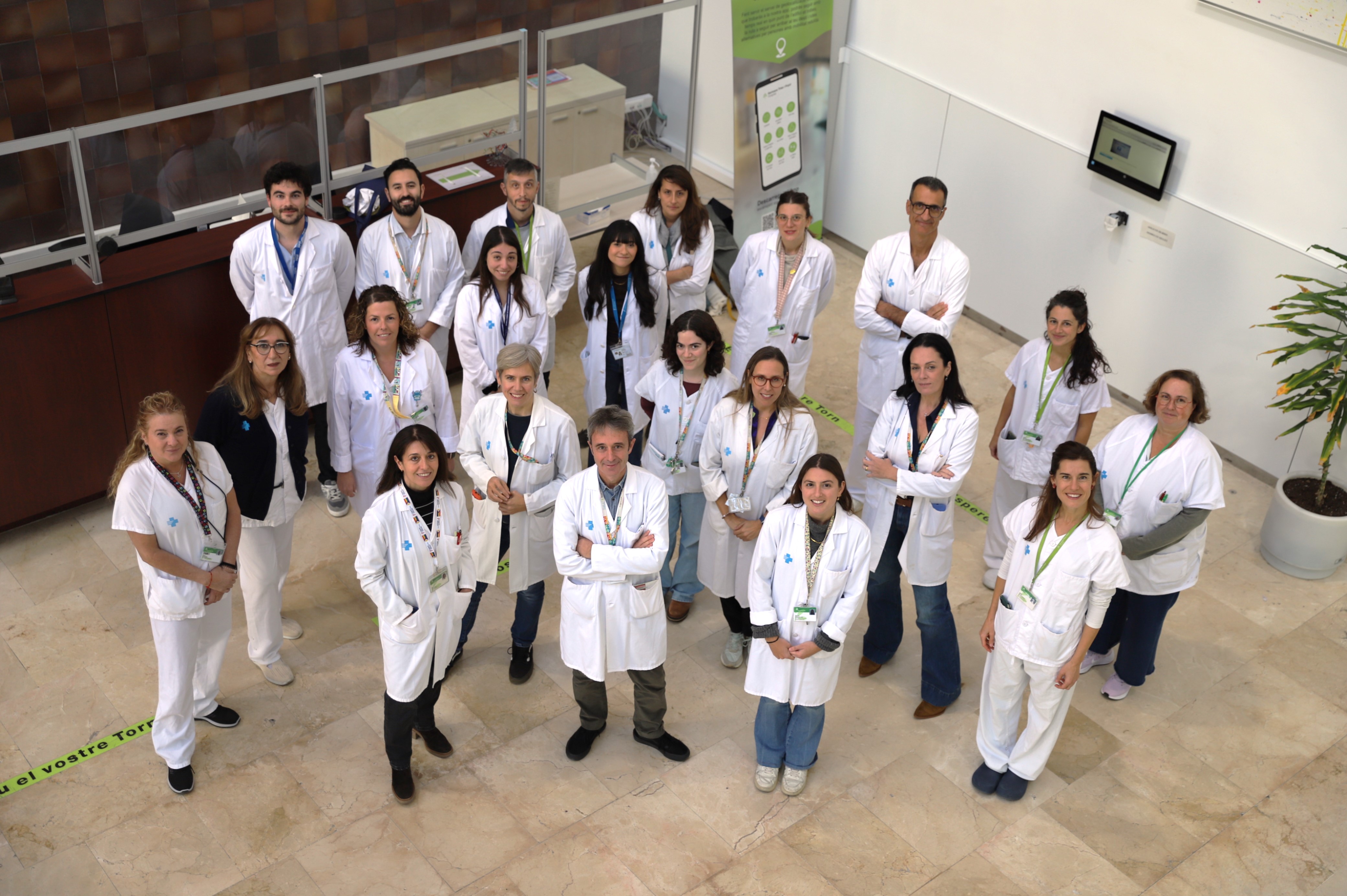
Otology Medical Team
Emilio Amilibia Cabeza
Head of Service
Marta Pérez Grau
Specialist Doctor
Àngela Callejo Castillo
Specialist Doctor
Susana Lareo Copa
Specialist Doctor
Fernando Orera Pérez
Specialist Doctor
Rhinology Medical Team
Paula Cruz Toro
Specialist Doctor
Laura Pardo Muñoz
Specialist Doctor
Ignacio Clemente Agodino
Specialist Doctor
Carlota González Lluch
Specialist Doctor
Head and Neck Medical Team
Carlos Pollán Guisasola
Head of Section
Maria del Mar Palau Viarnès
Specialist Doctor
Constanza Viña Soria
Specialist Doctor
Luis Juesas Iglesias
Specialist Doctor
Laura Palomino Meneses
Specialist Doctor
Paediatric ENT Medical Team
Mª Dolores Guerrero Gilabert
Head of Section
Nursing and Auxiliary Team
Montserrat Alcaráz López
Outpatient nursing team
Juliana Domínguez Hernández
Head and Neck nursing team
Asunción Varó Pérez
Outpatient TCAI team
Virginia Salvia
Speech and language therapist
Cristina Moreno Matas
Audiologist
Guillermina Achleitner
Speech and language therapist
Administrative team
Valentina Ortiz Teruel
Secretary's team
Rosa María Jiménez Santafe
Secretary's team
The Service of Otorhinolaryngology and Head and Neck Surgery is responsible for the comprehensive care and coverage of all otolaryngological and head and neck pathologies for all patients within the hospital's health catchment area (North Barcelona and Maresme).
The service is divided into sections including: the otology unit, rhinology, head and neck surgery, and paediatric otolaryngology, which allows it to be a centre of excellence for multiple conditions, performing innovative and highly complex diagnostic techniques, medical and surgical treatments typical of a tertiary care hospital.
The service's professionals actively participate in multiple multidisciplinary units, collaborating with the rest of the Hospital's specialities, thereby improving the comprehensive care of the patient and fostering global knowledge in each area.
Currently, it is the referral centre for the entire North Metropolitan and Maresme area for oncological pathology. In coordination with the Catalan Institute of Oncology (ICO), the study and treatment of complex tumour pathology of the head and neck, whether medical or surgical, is carried out, and the most advanced treatments are offered, such as transoral robotic surgery, a cornerstone of our department.
We also constitute the referral service for the whole of Spain for the study and treatment of NF2-related schwannomatosis, in coordination with the CSUR-Focal Epilepsy Multidisciplinary Unit, with multiple specialities from our centre such as Neurology, Neurosurgery, Clinical Genetics and Dermatology, offering extensive experience in acoustic neuroma surgery and lateral skull base surgery.
In the outpatient clinics, multiple examinations and functional tests are performed to study hearing, the vestibular system, nasal and olfactory physiology, voice and dysphagia, and minor diagnostic and therapeutic procedures are carried out with or without anaesthesia. In addition, the Department also provides general ENT care at the Doctor Barraquer and Doctor Robert specialist primary care centres in Sant Adrià del Besòs and Badalona.
The service's medical staff provide teaching at the Faculty of Medicine of the Autonomous University of Barcelona (UAB). The ENT department has extensive experience in teaching, as well as in the continuing training of ENT registrars since 2020. Furthermore, it participates in the training of family medicine residents and those from other services, both from its own centre and from other hospital centres. In addition, it participates in several lines of research, collaborating with the Germans Trias Institute, the IrsiCaixa AIDS Research Institute and other prestigious research programmes.
Featured service news
- Lídia Ruiz, an ENT resident, delves into advanced rhinology and skull base techniques during a training placement in Australia
- Germans Trias Hospital activates a cochlear implant in a patient with a rare disease
- The Germans Trias Otology and Skull Base course once again brings together specialists from across the globe to update their knowledge on the subject
► Basic Otology
The otology section performs all the basic procedures of the subspecialty: treatment of conductive hearing loss (stapes surgery and tympanoplasties), treatment of the chronic ear (myringoplasties, tympanoplasties, mastoidectomies) and treatment of tubal dysfunction (Tuboplasty). It has an Otology Committee where the most complex cases are presented.
► Implantable Devices Programme
The activities of this programme focus on the diagnosis of severe-to-profound hearing loss, its treatment with implantable devices such as bone conduction implants, middle ear implants and cochlear implants, and their programming and follow-up. The unit has a dedicated bimonthly clinic for cochlear and middle ear implants, and two audiology sessions for the programming of bone conduction implants.
► Otoneurology Unit
This unit is responsible for the diagnosis of vestibular pathology using vestibular tests such as Video-ENG, V-HIT, cervical VEMPs, ocular VEMPs and, more recently, Dynamic Visual Acuity testing. The unit holds a dedicated vestibular system assessment clinic three times a month and a multidisciplinary clinical committee.
► Neonatal Screening Programme
The Paediatric Otolaryngology Section, with the support of the audiology team, is responsible for the neonatal screening of congenital hearing loss in all babies born at Hospital Germans Trias i Pujol using automated evoked potentials, steady-state potentials and brainstem auditory evoked potentials.
► Lateral Skull Base Surgery Unit
A unit responsible for the diagnosis and treatment of otological pathology affecting the lateral skull base, primarily the treatment of vestibular schwannoma, but also any tumour pathology affecting this anatomical area (squamous carcinomas, jugulotympanic paragangliomas or endolymphatic sac tumours, among others). This unit has a weekly morning and afternoon operating theatre for the surgical treatment of the aforementioned pathology.
► Multidisciplinary Unit for CSUR-Phacomatosis
Hospital Germans Trias, together with the Catalan Institute of Oncology (ICO) and the Germans Trias i Pujol Research Institute (IGTP), has been accredited since 2015 as a National Reference Centre for Neurocutaneous Syndromes – Neurofibromatosis (CSUR) and is integrated into the European Reference Networks Genturis.
The CSUR Unit aims to provide comprehensive, multidisciplinary management for patients with phacomatosis, a group of diseases that includes neurofibromatosis type 1, schwannomatosis associated with the NF2 gene, other schwannomatoses, tuberous sclerosis and Von Hippel-Lindau disease. The Service of Otorhinolaryngology is integrated into this multidisciplinary unit and is an expert in the treatment of schwannomatosis associated with the NF2 gene.
The unit can see patients from across the state if they are referred by their home autonomous community. It also responds to consultations from specialists at other centres. The members of the CSUR-Facomatosis Unit meet twice a month and hold a dedicated clinic every fortnight.
► Multidisciplinary Unit for Facial Nerve Pathology
A multidisciplinary unit responsible for the diagnosis, management and treatment of complex peripheral facial paralysis. The unit offers patients with peripheral facial paralysis highly complex treatments such as neuromuscular re-education, botulinum toxin injections, oculoplastic surgery, facial nerve reinnervation, and microvascular muscle flaps to restore facial mobility. Currently, it meets once a month to discuss the most complex cases and to coordinate the different services involved.
► Audiology Unit
A unit that is responsible for the audiological diagnosis of hearing loss and the programming of implantable devices. It has 5 specialist clinics per month for complex cases and carries out audiometric studies daily. The unit performs pure-tone audiometry, speech audiometry, supraliminal audiometry, noise-level audiometry and localisation studies.
► Unit for Genetic Aetiology of Hearing Loss
A multidisciplinary unit which, together with the Clinical Genetics Unit, is responsible for the genetic diagnosis, genetic counselling and treatment of hereditary hearing loss. Its work is centred on a Clinical Committee that meets monthly. The unit has participated in the working group on genetic sensorineural hearing loss in Catalonia.
► Treatment of Eustachian Tube Dysfunction
Study and treatment of Eustachian tube dysfunction. Tubal dilation with a Tubavent catheter in selected patients.
► Head and Neck Functional Unit (UFOCC)
This is a multidisciplinary committee for the comprehensive treatment of oncological pathology of the head and neck. It is made up of the following departments: Otolaryngology, Oral and Maxillofacial Surgery, Plastic Surgery, Medical Oncology, Radiotherapy Oncology, Radiology, Endocrinology and Nutrition, Pathology, Rehabilitation, Social Work and specialist nursing. It meets weekly to assess and manage patients from the entire hospital's catchment area.
The service performs all types of complex oncological surgery of the head and neck, including transoral robotic surgery and radical surgery requiring reconstruction with pedicled or free microvascular flaps, sometimes in collaboration with the Plastic Surgery Service.
► Robotic Transoral Surgery Programme
For the treatment of tumours located in the oropharynx, supraglottis or the para pharyngeal space that are amenable to excision through the oral cavity, or for surgeries for sleep apnoea. At our centre, we have developed extensive experience since 2017, the year the transoral robotic surgery programme with DaVinci was launched, making us one of the first centres in Spain to establish and develop this approach, and the first in a public hospital in Catalonia. We are currently the referral centre for the Northern Metropolitan Area for this type of approach.
► Dysphagia Unit
This unit provides comprehensive, multidisciplinary diagnosis and treatment for oropharyngeal dysphagia (difficulty in swallowing), as well as nursing training for hospital dysphagia screening. The unit includes the Departments of Otorhinolaryngology, Rehabilitation, and Endocrinology and Nutrition. It is a pioneer in implementing the MEC hospital screening test and in standardising the Fibroendoscopic Swallow Study (FEES) as a diagnostic tool for dysphagia.
Specialised care for paediatric dysphagia, jointly with Paediatrics, Rehabilitation and Nutrition, with a dedicated clinic including observational examinations and FEES with breast milk.
► Voice rehabilitation in laryngectomised patients
Voice prosthesis. Primary and secondary placement in laryngectomised patients. Follow-up of patients in consultations to carry out necessary replacements. Support in voice rehabilitation for patients not suitable for a voice prosthesis.
► Treatment with botulinum toxin in the Area of Otorhinolaryngology
Within our area, there are numerous conditions that may require treatment with botulinum toxin, such as patients with oropharyngeal dysphagia and sialorrhoea, facial nerve pathology, and some vocal disorders such as spasmodic dysphonia.
► Treatment of apnoea
Treatment of childhood and adult sleep apnoea and hypopnoea syndrome (OSAHS). The Department participates in the Multidisciplinary Sleep Unit alongside the Departments of Pulmonology, Oral and Maxillofacial Surgery, Endocrinology, Neurology, Paediatrics and Psychiatry. A comprehensive approach to the patient is undertaken, and as ENT specialists we lead the fibre-optic examinations under sedation (DISE), as well as any surgical treatments that may follow, including transoral robotic surgery.
► Surgical treatment of cervical and pharyngolaryngeal pathology
We carry out the full diagnostic and therapeutic assessment of vocal pathology and have a specialist clinic for voice disorders. From here, we coordinate speech therapy, either jointly with the Rehabilitation Service or by deciding on the phonosurgical procedures the patient requires.
We also have experience in airway surgeries, such as for subglottic stenosis or vocal cord fixations, which may require surgical procedures for their treatment.
Furthermore, we have extensive experience in the treatment of benign cervical conditions such as congenital cysts, pharyngolaryngeal or upper oesophageal diverticula, and adenopathies that may require surgical investigation and treatment, as well as tumour pathology of the salivary glands or thyroid.
► Clinical Assistance in Rhinology
The Rhinology Section is responsible for the diagnosis and treatment of allergic, non-allergic and vasomotor rhinitis. Acute and chronic rhinosinusitis, with or without nasal polyps. The follow-up of patients with nasosinusal inflammatory pathology. The treatment of nasal obstruction and recurrent epistaxis. Management of malformations and anatomical abnormalities of the nose. Treatment of infectious, oncological and structural pathologies of the paranasal sinuses.
► Rhinologic Surgery
The Rhinology section is responsible for the surgical treatment of rhinologic pathology; functional and advanced endoscopic surgery of the paranasal sinuses (FESS). Complex and revision nasal polypectomy. Endoscopic dacryocystorhinostomy. Treatment of mucoceles and benign lesions. Septoplasty (correction of nasal septal deviation). Functional rhinoseptoplasty. Turbinectomy and nasal turbinoplasty. Endoscopic surgery for nasal obstruction.
► Anterior skull base surgery
The Department performs minimally invasive endoscopic approaches to lesions of the anterior skull base, whether benign or malignant tumours (meningiomas, pituitary adenomas, esthesioneuroblastoma). It is also specialised in the treatment of cerebrospinal fluid (CSF) leaks, the repair of osteodural defects and advanced anterior skull base reconstruction. In complex cases, combined surgery is performed with Neurosurgery, and the transsphenoidal approach is routinely used for pituitary tumours. The most advanced techniques, such as navigation-guided endoscopic surgery, are used.
► Olfaction Unit
The Olfaction Unit at Hospital Germans Trias i Pujol was created in the wake of the COVID-19 pandemic, but has established itself as one of the few specialised and referral units in the country. It offers comprehensive, multidisciplinary care for post-viral, post-traumatic and neurological olfactory pathology, including the follow-up of patients with sinonasal inflammatory conditions, and ensures continuous assessment and monitoring of patients. It develops specific therapeutic protocols, including a structured olfactory training programme, and has one of the most comprehensive diagnostic tests, the Sniffin' Sticks, with over 4,000 tests performed, available in only a few centres. Today, it acts as a referral centre for several health areas. The Unit is integrated with the Persistent COVID Unit.
► Nasal function study
Study of nasal function using rhinomanometry, a test that allows the objective assessment of nasal airflow and the different areas of nasal stenosis with the aim of improving diagnosis, surgical indication, and the evaluation of surgical outcomes in patients with nasal obstruction. Olfaction is also assessed using Olfactometry (Sniffin' Sticks).
► Severe Asthma Committee (UAG)
This is a multidisciplinary committee that meets monthly, comprising professionals from the Allergy, Pulmonology, Paediatrics and Otorhinolaryngology, aimed at the global assessment and management of patients diagnosed with severe asthma, chronic rhinosinusitis and allergic rhinitis, as well as the discussion and approach to current issues in these pathologies. The SEAIC (Spanish Society of Clinical Allergy and Immunology) has accredited this unit as a centre of excellence and as a teaching unit for providing practical, in-person training in severe asthma.
► Facial Pain Committee
This is a multidisciplinary team comprising specialists from the Departments of Otorhinolaryngology, Neurology and Anaesthesiology, dedicated to the comprehensive assessment and management of patients with facial pain.
► Thyroid-Orbitopathy Committee
A unit comprising the Endocrinology, Ophthalmology, Plastic Surgery, Maxillofacial Surgery and Otorhinolaryngology services, which assesses patients with orbitopathy secondary to thyroid gland pathology.
► Neuroendocrine Tumour Committee
The Departments of Neurosurgery, Neurology, Endocrinology, Radiology and Otorhinolaryngology meet to assess these patients with complex tumours.
► Anterior skull base surgery
The Department performs minimally invasive endoscopic approaches to lesions of the anterior skull base, whether benign or malignant tumours. It also specialises in the treatment of cerebrospinal fluid (CSF) leaks, the repair of osteodural defects and advanced anterior skull base reconstruction. In complex cases, combined surgery is performed with Neurosurgery, and the transsphenoidal approach is routinely used for pituitary tumours.
► Basic Paediatric Otorhinolaryngology
A unit that treats basic paediatric pathology in collaboration with the Paediatrics department and the Paediatric Anaesthesia Unit. In particular, this includes inflammatory/infectious disorders of the Waldeyer's ring, adeno-amygdalar hypertrophy, recurrent infections, and recurrent otitis media due to tubal obstruction.
► Neonatal Screening Programme
The Paediatric Otorhinolaryngology section, with the support of the audiology team, is responsible for the neonatal screening for congenital hearing loss of all babies born at the Germans Trias i Pujol Hospital, using automated evoked potentials, steady-state potentials and brainstem auditory evoked potentials. The Service coordinates with the local CREDAs and CDIAPs, with whom it holds regular meetings to monitor infants in need. It provides indications for and manages PAOs for hearing aids. It participates in the working group on genetic sensorineural hearing loss in Catalonia.
Vestibular neuroma surgery and NF2-related schwannomatosis unit
The Vestibular Schwannoma is the most common benign tumour of the skull base, specifically in the pontocerebellar angle. It usually presents unilaterally (sporadic schwannoma) and exceptionally bilaterally, in association with the genetic disorder schwannomatosis, which is related to the NF2 gene. It generally presents with hearing loss, hearing impairment and tinnitus, while balance disturbances are less common.
Treatment options include observation with periodic monitoring by magnetic resonance imaging (MRI), surgery and radiosurgery. The choice of treatment will depend primarily on the patient, their age and any associated conditions, their hearing and the size of the tumour.
The management of patients with this condition includes treating the tumour to control its growth, usually by surgical resection, and subsequent hearing rehabilitation, which can be particularly challenging in patients with schwannomatosis related to the NF2 gene.
The ENT Department has extensive experience in neuroma surgery, being the referral centre for the whole of Catalonia. For this reason, it is a reference centre for Neurofibromatosis Type 2 in Spain, as the Ministry of Health, Social Services and Equality has accredited us as a CSUR for Phakomatoses (Centres, Services and Units of Reference of the National Health System).
Cochlear implant
A cochlear implant is a device that is surgically implanted in patients who suffer from profound hearing loss in both ears. The implant electrically stimulates the auditory nerve, allowing for greater hearing. It is usually fitted to:
- Paediatric patients with congenital or childhood-acquired deafness, for whom conventional hearing aids are not sufficient
- Adult patients who, due to the severity of their deafness, cannot benefit from hearing aids
Cochlear implants consist of an internal device housed in the inner ear (cochlea) and an external (visible) one that looks similar to a conventional hearing aid.
The surgery required to implant the internal part of the device is performed through an incision behind the ear. Through this incision, electrodes are placed in the inner ear, which requires removing the bone that covers this part of the ear.
After the operation, the initial programming is carried out, accompanied by auditory rehabilitation focused on progressing through stages: sound detection and discrimination, identification of sounds and words, and word recognition and verbal comprehension.
The ENT department at our centre has extensive experience in cochlear implant surgery, as well as a team of audiologists and hearing rehabilitation specialists within the Cochlear Implant Programme.
Transoral robotic surgery
Transoral surgery using the da Vinci robotic platform has represented a significant advance in the treatment of oncological pathology of the oropharynx, hypopharynx and supraglottis, as well as in selected patients with advanced oropharyngeal cancer. In this service we were pioneers in this type of surgery, being the first public hospital to launch a stable robotic surgery programme with weekly availability of the platform in 2017, which has continued to this day. The Germans Trias i Pujol University Hospital is the hospital with the highest number of TORS procedures performed in the whole of Spain, and we are a centre of excellence for this approach and a referral centre for all of Catalonia.
The treatment of oropharyngeal cancer has undergone a significant evolution in recent years. The standard treatment has been the combination of chemotherapy and radiotherapy since 2000. These treatments present significant acute and chronic toxicity, and can cause a relevant deterioration in patients' quality of life.
The increase in the incidence of human papillomavirus (HPV)-related oropharyngeal carcinoma has led to both a shift in the patient profile, towards younger patients, and in prognosis. This, together with the advent of these new surgical tools for transoral approaches, has represented a paradigm shift in the treatment of these tumours, providing good functional outcomes with oncological results comparable to previous treatments.
Ultrasound in ENT clinical practice
Normalisation of ultrasound use in our consultations for the study of cervical masses. We have implemented the use of cervical diagnosis and monitoring by ultrasound. In addition, we perform diagnostic procedures with ultrasound-guided fine-needle or core-needle aspiration, and therapeutic procedures involving ultrasound-guided drainage of collections or abscesses.
The Service actively participates in the Lymphoma Committee, where it provides for the need for studies, clinical and ultrasound examinations, fine or thick-needle aspirations, and adenectomy surgeries for the histopathological diagnosis of tumours.
Nasosinusal polyposis
At the Rhinology Section we have extensive experience in treating patients with chronic rhinosinusitis with nasal polyposis. We offer a comprehensive approach that includes diagnosis using state-of-the-art tests and cutting-edge technology, ongoing clinical monitoring and updated protocols to ensure an accurate diagnosis based on precision medicine.
The section has a strong research output, with several lines of work focused on the efficacy and safety of medical, surgical and biological treatments, including multicentre and real-world studies, and on advancing knowledge of the pathophysiology and predictive markers of the disease.
Furthermore, we are part of the Severe Asthma Committee and maintain direct contact with various specialities, such as Pulmonology, Allergy, Paediatrics and Pharmacy, to offer patients the best therapeutic option and coordinated, high-quality care. This combination of clinical expertise, advanced technology and active research makes our section a benchmark in the management of severe, hard-to-control nasosinusal polyposis.
The Service of Otorhinolaryngology is based at the Can Ruti Campus and collaborates regularly with the IGTP Research Institute, as well as other institutes on the campus, such as IrsiCaixa or the Josep Carreras Leukaemia Research Institute.
Its main lines of research are:
- Study of the pathophysiological basis and management of vestibular schwannoma.
- Auditory rehabilitation using cochlear implant in neurofibromatosis type 2.
- Collaboration with the ICO and IGTP on various head and neck cancer research projects, on the use of new therapeutic strategies such as immunotherapy or chemoimmunotherapy, and on the study of new tumour marker pathways and tumour escape pathways.
- Various lines of research in sinonasal pathology, olfaction and skull base. Participation in multicentre and “real world” studies.
- Evaluation of new medical, surgical and biological therapies in the treatment of sinonasal polyposis.
- Innovation Project on nasal cytology (Can Ruti Innova-CRI).
Undergraduate teaching
The service provides the theoretical and practical teaching for fourth-year students of the Faculty of Medicine at UAB at the Germans Trias i Pujol Campus. It has one course coordinator and two associate professors who deliver the theoretical classes and practical seminars. Optional placements are also coordinated for 6th-year UAB students and/or students from other universities who may be interested.
Postgraduate teaching
The service has been accredited with places for postgraduate training for medical residents (MIR) since 2019, offering one place per year. During their four-year training, the resident is supported by a resident tutor who is responsible for supervising, assessing and guiding their training from start to finish.
Residents undertake internal rotations through all sections and various departments of the hospital. The department also promotes and assists with external rotations abroad to visit centres of excellence, thereby complementing their training. They are encouraged to attend specialised conferences and to present communications at them.
Furthermore, they are also encouraged to get involved in projects to develop their doctoral thesis throughout their residency.
Trainees actively participate in clinical and surgical activities, as well as in clinical and training sessions, and in clinical and basic research projects. From time to time, the department also hosts ENT residents from other centres in Spain and/or abroad for variable periods of training, who are interested in the techniques carried out in our department.
Residents information
-
1 accredited place per year.
- Teaching guide.
► Check out the top news from the ENT residents at Hospital Germans Trias
Continuous training
The Service of Otorhinolaryngology at the Germans Trias i Pujol University Hospital meets weekly for a monographic session for the department's members, where specific topics, literature reviews and presentations from conferences are discussed.
The residents also organise a weekly session in which one of them presents a topic on the subspecialty they are working on during each academic year. These sessions can be attended in person or joined online via a platform if they are on delivery duties or external rotations.
The department periodically organises various in-person and/or online courses in the different subspecialties:
- Course in Robotic Transoral Surgery, Parafaryngeal Space Approaches and Dissection
- Course in Otolaryngology and Lateral Craniofacial Surgery
- Course in Nasal Polyposis and Severe Asthma
- Course in the Fundamentals of Vertigo, Theoretical and Practical Clinical Management
- Updates for GPs on various pathologies
- Training for outpatient and ward nursing staff in the management of tracheostomy tubes
Contacte: orl.germanstrias@gencat.cat